

November 26th, 2026
Selling a Patek Philippe Pocket Watch Converted to a Wristwatch? How Buyers Evaluate the Conversion
If you want to sell a Patek Philippe watch that started life as a pocket watch, begin by identifying what survived the conversion. A buyer will look at which components are original, how the watch was adapted for the wrist, and whether the original pocket-watch case still exists. Those details help explain why two conversions with similar-looking movements can receive different offers.
Whether you inherited the watch or bought it for your collection, share what you know about its history and flag any details you’re unsure of. An authentic Patek Philippe movement can be housed in a later case, and a specialist will assess the movement and case individually before valuing the watch as a whole. Patek Philippe watch evaluations
What a Patek Philippe Watch Buyer Checks First
A conversion can take several forms. A watchmaker may have transferred the pocket-watch movement and dial into a custom wristwatch case, or adapted the original case by adding lugs, the fittings that hold a strap. The buyer examines the movement, dial, hands, crown, and case to identify which parts belong together, which were modified, and which appear to have come from another source.
Movement markings, construction, and finishing help a specialist assess the movement’s origin. On the dial, the buyer may check whether the signature appears consistent with the dial’s age and whether the surface has been refinished. Case hallmarks and numbers offer additional clues when present. A serial number is one authentication factor, and its usefulness depends on how it fits with the physical evidence and available records.
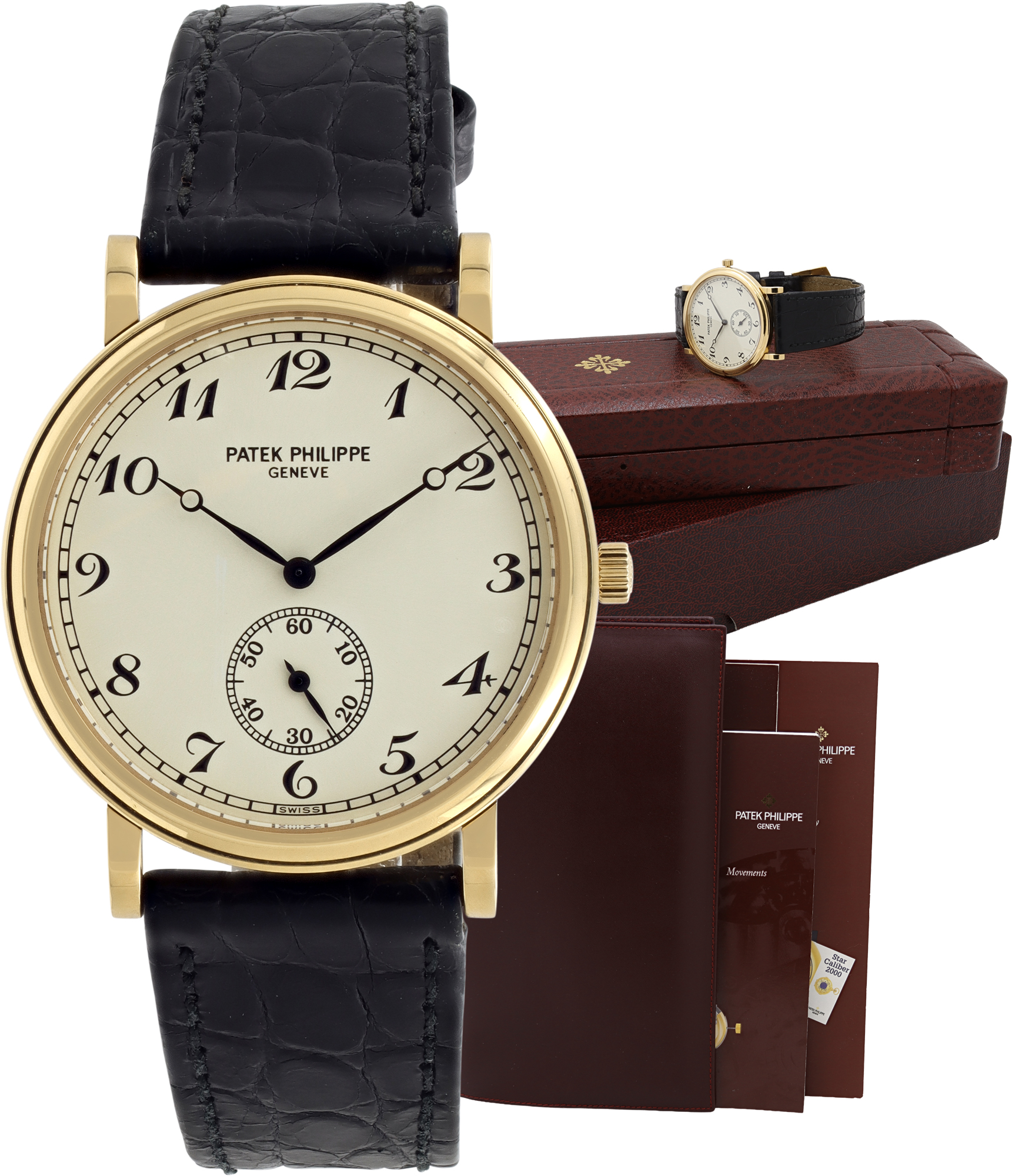
Patek Philippe Calatrava 5022, a factory wristwatch shown as a reference for case and lug design.
How Conversion Quality and Original Parts Affect Value
A buyer checks how securely the movement sits in its case, whether the crown winds and sets the watch smoothly, and whether the hands clear the dial and crystal. The lugs also matter because they bear the weight of the watch on a strap. Loose fittings, signs of corrosion, or a movement that shifts in its case can raise questions about repair costs and future wear.
If you have the original pocket-watch case or any parts removed during the conversion, include them in your quote request. A specialist can examine whether the parts belong to the watch and whether returning it to its pocket-watch configuration is feasible. Even when the case survives, alterations to the movement, dial, or mounting points can make reassembly more involved. Pocket watch buyer and evaluation page
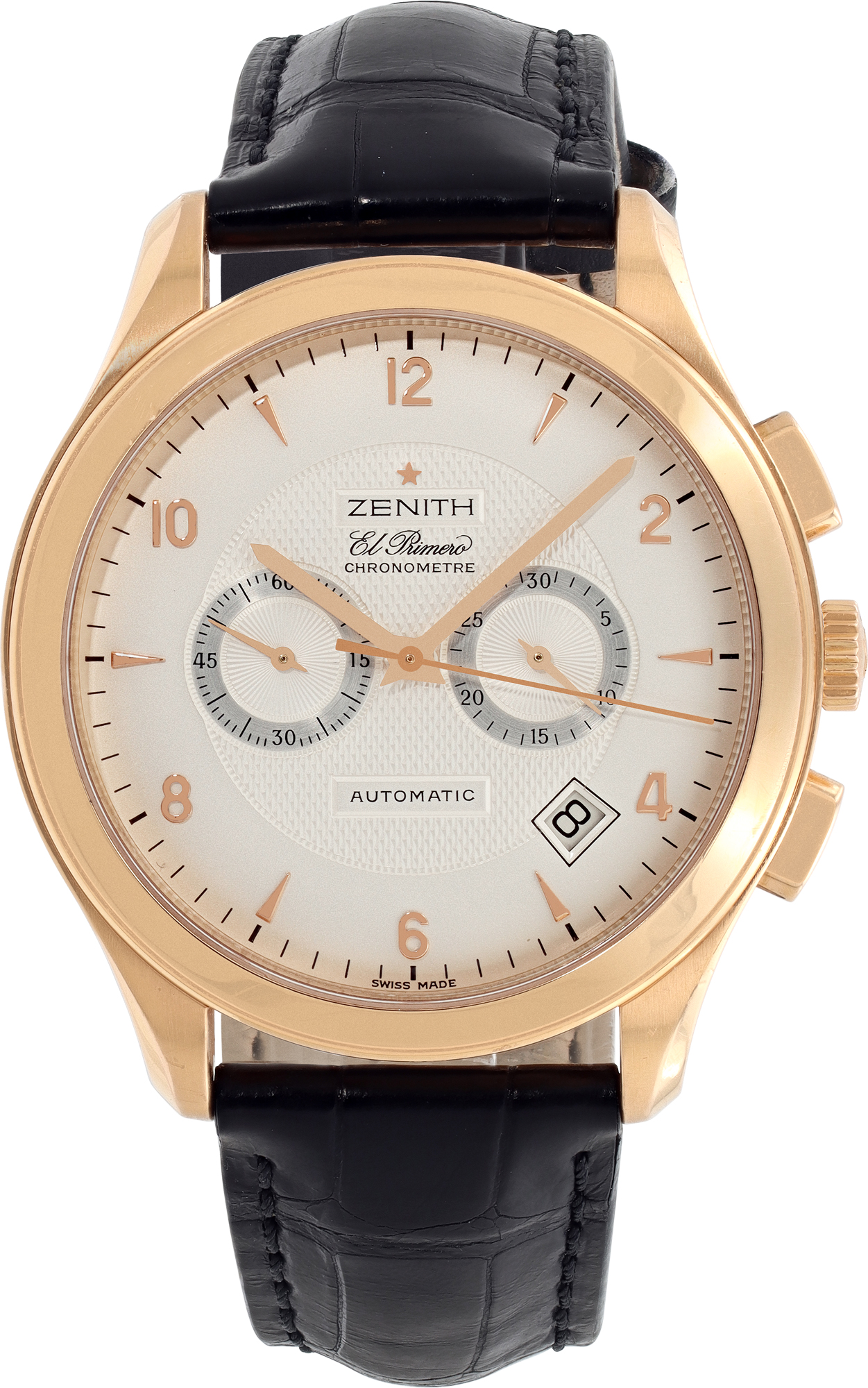
Patek Philippe 9G, shown as an example of a pocket-watch configuration.
How Buyers Price a Converted Patek Philippe Pocket Watch
Buyers look for comparable sales that reflect the movement, condition, and type of conversion. A watch with its original dial, a well-fitted later case, and documented conversion work may appeal to someone who wants to wear it. A collector who prioritizes factory originality may place more weight on the surviving pocket-watch components and the feasibility of restoring the original configuration.
An asking price for a factory Calatrava or an intact Patek Philippe pocket watch offers limited guidance for a conversion. A buyer may consider the rarity of the movement, the condition of the dial, the material of the case, and the work needed to make the watch wearable. If you’re considering selling the watch with its spare parts or offering them separately, the outcome depends on the specific items, their condition and documentation, the buyer, costs, and the current market. Luxury watch buyer
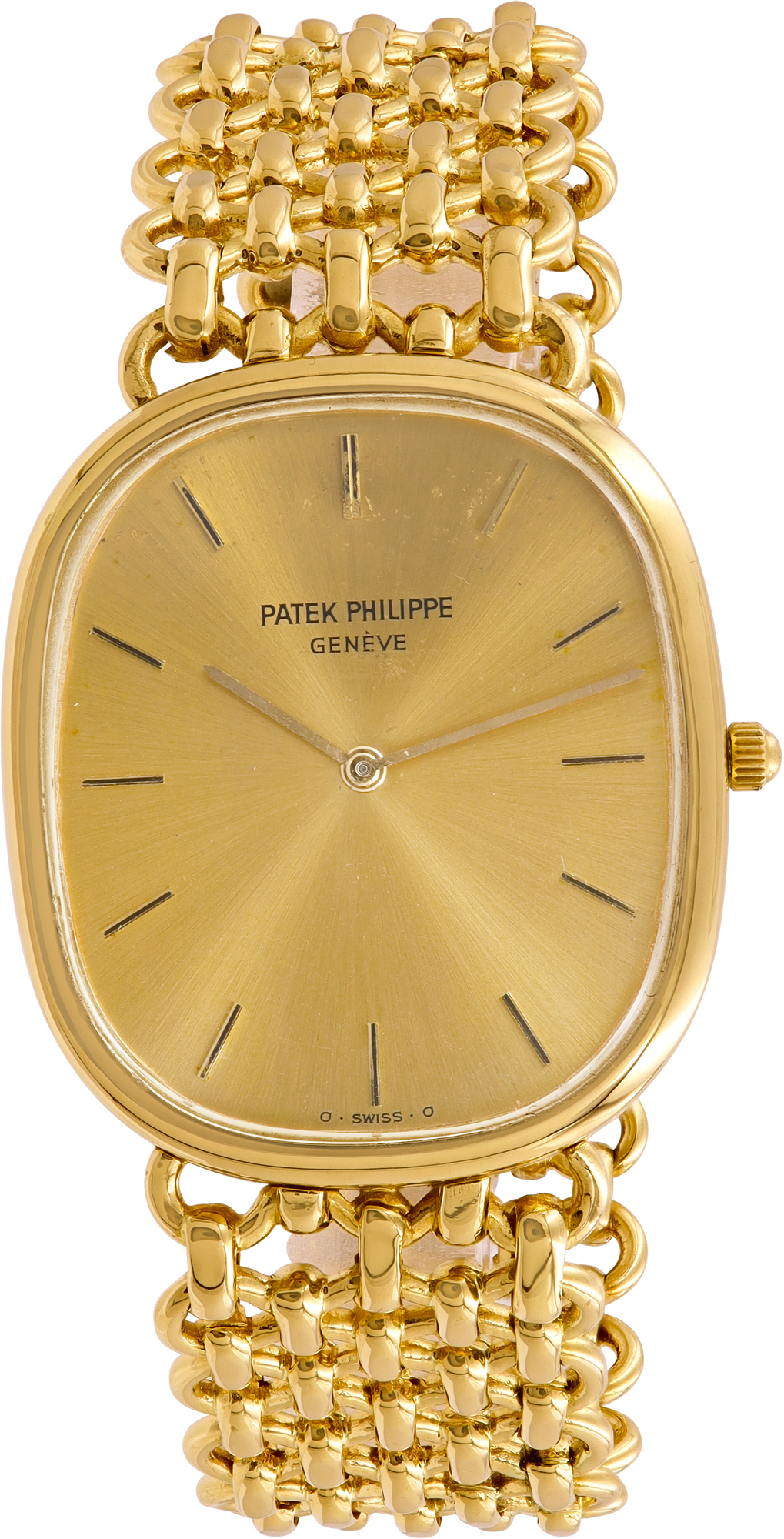
Patek Philippe Golden Ellipse 3738, a factory wristwatch with its own case design and market comparisons.
What to Send With Your Watch Quote Request
Start with clear photos in indirect daylight. Show the full dial, both sides of the case, the case back, the crown, and the points where the strap attaches. Photograph any loose parts and the original pocket-watch case, if available. If the movement is visible through a display back, photograph it there. A watchmaker can help if the case needs to be opened for inspection.
Share any conversion invoices, service records, receipts, correspondence, or packaging you have. A conversion invoice may describe the work performed, while a service record may help explain when the movement was last inspected. For an inherited watch, a brief family account can provide a starting point. Documentation provides supporting context, and its weight and the evidence required for authentication or ownership verification vary by buyer and verification process. Guide to inherited vintage pocket watches
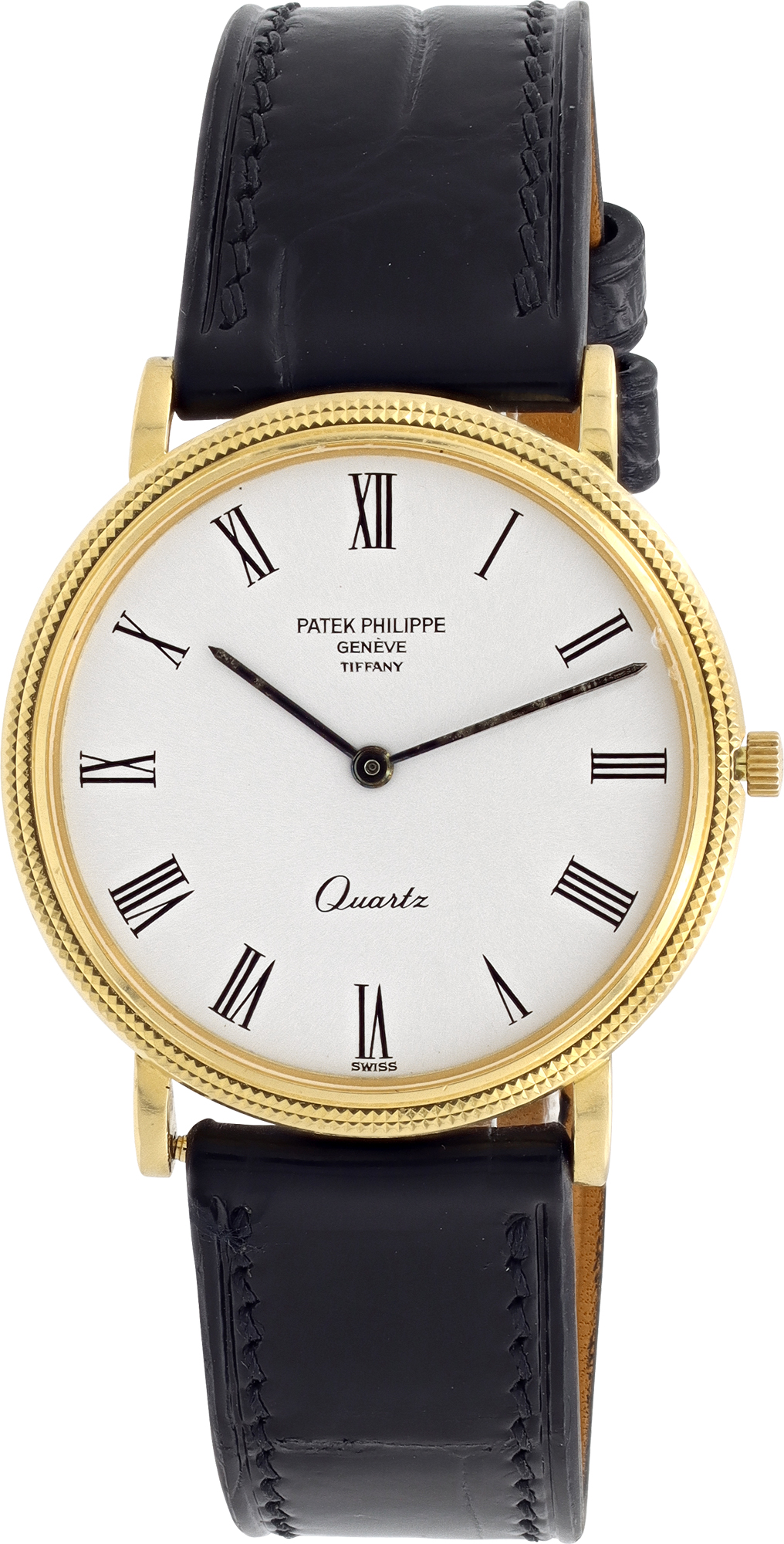
Patek Philippe Calatrava 3744, an example of a watch originally made for the wrist.
Request a Quote for Your Converted Patek Philippe
When comparing offers, ask which components the buyer considered original, how the conversion affected the estimate, and whether the offer includes any loose parts you submitted. If the initial figure is based on photographs, ask what an in-person inspection could change. Before sending the watch, confirm the applicable shipping, insurance, payment, and return terms so you can compare the transaction costs as well as the quoted price. How the selling process works
Sell Us Your Jewelry buys and evaluates luxury items from the public through its quote process. Describe the piece as a Patek Philippe pocket watch converted to a wristwatch, include photos of the watch and any surviving parts, and share what you know about the conversion. If you’re also sorting through an estate or downsizing a collection, you can find quote pages for jewelry, diamonds, and sterling silver on the homepage. Sell Us Your Jewelry · Request a watch quote
About Us | Sell Us Your Jewelry
Call Us Now: 305 770 6955
The Purchasing and Consignment Division of Gray & Sons


Be the first to know | SEE OUR CATALOG

